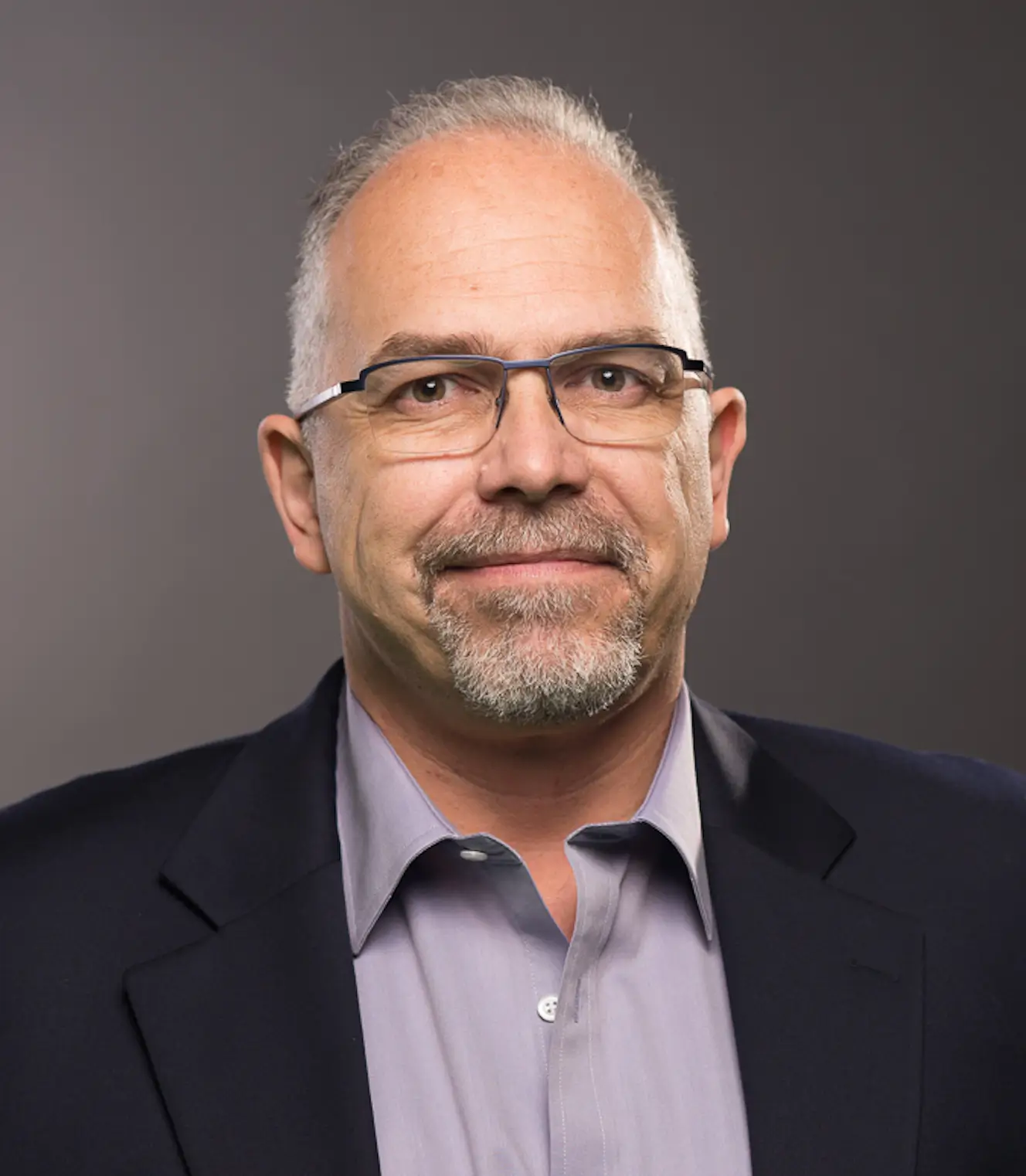
Whole AI Launches Fellowship Initiative; Dennis Moreau Named Whole AI Distinguished Trust & Information Architecture Fellow
Emerging advisory, research and ecosystem platform brings together people, expertise and ideas across technology, institutions and human systems to navigate consequential change
SAN FRANCISCO – September 29, 2026 – Whole AI™, an emerging advisory, research and ecosystem platform founded to help enterprises, institutions and people make better decisions amid consequential technological and societal change, today announced its Fellowship initiative and named security architect, researcher and educator Dennis Moreau, PhD, its Distinguished Trust and Information Architecture Fellow.
The announcement marks an early milestone in Whole AI’s development and reflects an idea at the heart of its work: many of the hardest questions emerging around artificial intelligence are not AI questions alone.
As frontier models and AI capabilities move beyond their developers into products, workplaces, infrastructure and decision-making environments across industries, questions about their pace, control and consequences increasingly cross disciplines and institutions. They involve technology and business, security, privacy and infrastructure, products and markets, governance and law, public and private institutions, and ultimately the people who build, use and are affected by these systems.
“Throughout my career, I’ve often found myself moving between different rooms: research and business, technology and product, public and private institutions, technical and non-technical communities,” said Nicole Yue, Founder, CEO & CAIO of Whole AI™. “Different people can be looking at the same problem and holding different pieces of what is true. Whole AI grew from a desire to bring more of those pieces into relationship; to see the larger system, make better decisions and expand what becomes possible.”
Whole AI describes this broader orientation as Humanity-Centered™: a recognition that people across geographies, socioeconomic and cultural contexts, disciplines and positions of influence experience technological change differently; and may see parts of shared systems that others cannot.
The goal is not to erase those differences, but to create stronger connections across them.
As technological capabilities grow, Whole AI is exploring a complementary question: What else must grow with them?
Its emerging work considers the architectures surrounding AI and institutional decision-making alongside distinctly human capacities for judgment. This includes early work around Whole Human Judgment™ and the Heart-Brain Training™ paradigm, examining how reasoning, reflection and discernment can develop alongside technological capability.
The larger proposition is not human versus machine, or progress versus responsibility. It is whether trust, progress, profit and humanity can scale together.
Fellowships as a bridge across knowledge
The Fellowship initiative is one early mechanism for putting that thesis into practice.
It is intended to bring accomplished practitioners, researchers, educators and institutional leaders into focused inquiry where established bodies of knowledge can inform emerging technological and societal questions.
“We shouldn’t assume everything needed to navigate AI’s future was invented with AI,” Yue said. “There are decades of knowledge across mathematics, science, engineering, computing, security, privacy, law, business, history, economics, the humanities and social sciences that can help us understand not only the technology, but what happens when technological capability changes the societies and institutions around it.”
Depending on the area of inquiry, Fellows may contribute through research, practitioner guidance, frameworks, paradigm definition, comparative analysis, education, convenings and cross-sector dialogue. Whole AI expects the model itself to develop through interaction with Fellows, collaborators and the people and institutions its work reaches rather than from the assumption that every element should be predetermined.
Dennis Moreau, Ph.D. and Security for AI
Moreau’s appointment provides an early expression of that approach.
Across a career spanning academic research and teaching, security architecture, industry leadership and standards-related work, Moreau has worked through successive generations of technological change. His experience includes senior security and technology architecture roles at RSA, VMware and Intel; 15 patents spanning security and enterprise technology; and contributions to NIST, U.S. defense and other security and standards initiatives, including work advancing Zero Trust architecture.
A computer scientist by training and former tenure-level professor, Moreau has worked across research and applied environments extending from cybersecurity and high-performance computing to computational biology, AI and emerging trust architectures. Throughout his work, he has emphasized systems thinking; teaching and enabling others see security, technology and trust in the context of the larger systems in which they operate.
His Fellowship work will initially center on Security for AI, with broader inquiry into information and trust architecture for AI, high-performance computing, quantum systems and emerging deployment environments.
“The velocity and scale of technological and societal change that we are facing, and the associated challenges and opportunities, are precipitating a necessary reconsideration of the objectives, practices, methods and techniques that we employ to establish and sustain trust, security and accountability in our interactions. As in past disruptive evolutions of technology, it is essential to cultivate and foster the crosscutting engagement, discussions, and collaborations that will contextualize and inform our efforts. Whole AI endeavors to build the bridges that enable doing so.
I am deeply appreciative of this appointment and humbly mindful of the responsibility that accompanies this recognition.”
Moreau will explore related themes in his upcoming keynote, “AI and Cybersecurity: Trust at the Intersection of Intention, Speed and Discipline,” at the 2026 Marist Computing Conference on October 30.
Building through interaction
Whole AI is similarly taking an iterative approach to its own development. Its work currently spans early advisory, research, education, Fellowship and cross-sector efforts, with additional forms of participation and collaboration being explored.
The underlying principle is straightforward: the people Whole AI serves can also be part of how it learns. Their questions, expertise, experiences and outcomes can inform what the organization researches, develops, teaches and brings back into the world.
In 2026, Yue won the AINext AI Governance & Responsible Innovation Leadership Award and was selected among CIOReview’s Top 10 Chief AI Officers 2026. Yue and Moreau will return to The AI Conference 2026 in San Francisco, September 30-October 1, one year after first meeting there.
Their collaboration offers one early example of the larger Whole AI thesis: different forms of knowledge, experience, judgment and wisdom can reveal more when brought into relationship.
About Whole AI™
Whole AI™ is an advisory, research and ecosystem platform helping enterprises, institutions and people make better decisions amid consequential technological and societal change.
Whole AI brings together technology, strategy, governance, human judgment and cross-sector expertise to explore how people and organizations can adopt new capabilities while strengthening the systems of trust, responsibility and agency around them.
Its work spans advisory engagements, research, speaking, education, strategic convenings, fellowships and cross-sector collaboration, and it continues to adapt and evolve.
Learn more: wholeai.co
Media Contact:
Dan Chmielewski
Madison Alexander PR for Whole AI™
714-832-8716
949-231-2965
dchm@madisonalexanderpr.com
@MadAlexPR and @TecFlack